LinkedIn Visibility Now Shapes AI Visibility
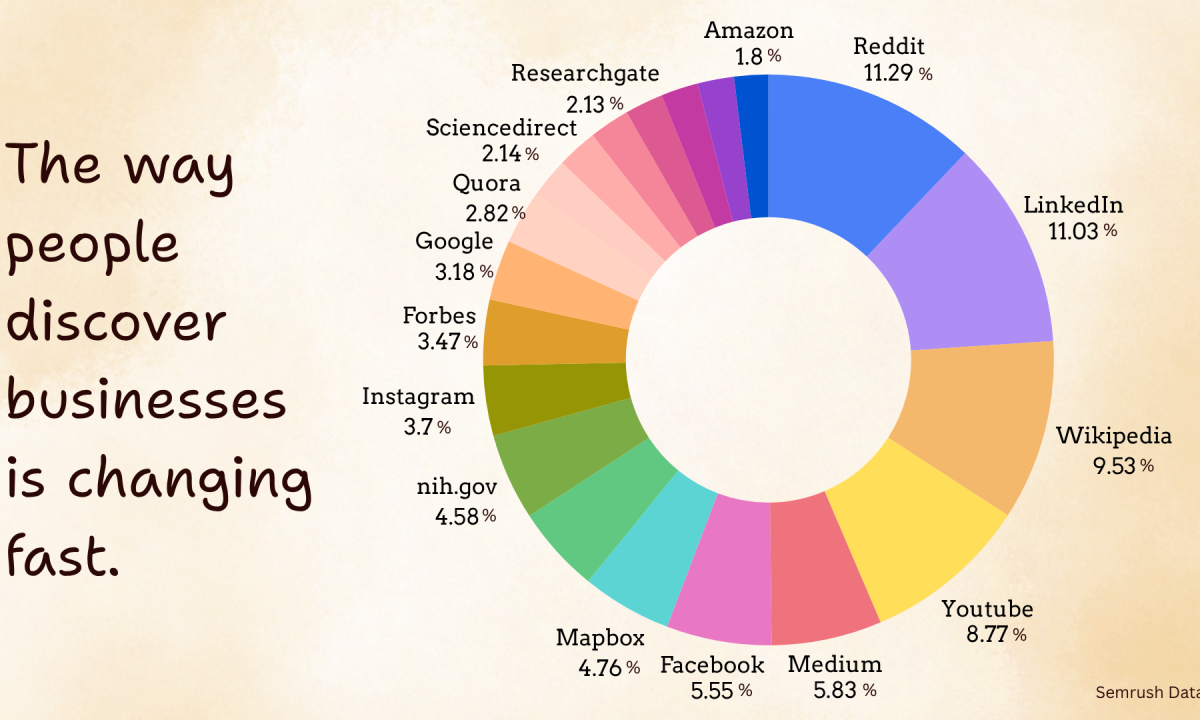
The way people discover businesses is changing fast.
For years, brands focused on ranking on search engines, optimizing websites, and publishing blogs to attract buyers. That still matters. But today, decision-making increasingly starts inside AI tools like ChatGPT, where users ask direct questions such as:
- “Which business consultant should I work with?”
- “What’s the best branding strategy for startups?”
- “Who are the leading experts in digital transformation?”
Here’s the shift most businesses still underestimate: AI models are not pulling answers from thin air. They rely heavily on publicly available content across trusted platforms. And according to recent research, LinkedIn has become one of the most cited domains in AI-generated responses, second only to Reddit.
That changes the role of LinkedIn entirely.
It’s no longer just a networking platform or a place to post company updates. It’s becoming a digital credibility layer for brands, founders, consultants, and businesses that want to stay visible in an AI-driven marketplace.
AI Is Quietly Building Buyer Shortlists
Today’s buyers are no longer relying only on Google searches.
Many now ask AI platforms to compare companies, recommend service providers, summarize expertise, or shortlist trusted brands before they ever visit a website.
What this really means is simple:
If your business is not consistently publishing valuable, specific, and credible content online, AI systems have very little information to reference about your brand.
And when that happens, competitors who are actively sharing insights become more visible by default.
For business consulting and corporate branding firms, this creates a major opportunity.
Visibility Is No Longer About Virality
One of the biggest misconceptions about LinkedIn marketing is that success depends on going viral.
The data tells a different story.
Research shows that many of the LinkedIn posts most frequently cited by AI receive only modest engagement, often between 15 and 25 reactions.
So what actually increases visibility?
Consistency, clarity, and authority.
AI systems tend to favor content that includes:
- Specific industry insights
- Real business experiences
- Named tools, companies, and frameworks
- Technical depth and practical examples
- Original perspectives instead of reposted content
In fact, studies referenced by Semrush and Scrunch indicate that original content accounts for nearly 95% of cited LinkedIn material.
That’s a critical insight for modern brands.
The goal is no longer just social engagement. The goal is becoming discoverable, referenceable, and trusted by both humans and AI systems.
What Smart Brands Should Be Doing Now
Businesses that want stronger digital visibility should start treating LinkedIn as part of their long-term search and authority strategy.
That means:
- Publish expertise consistently: Share insights around your niche instead of broad generic advice. Focused expertise performs better than scattered content.
- Create original thought leadership: AI favors fresh perspectives, practical observations, and first-hand experiences over recycled information.
- Use specific details: Mention industries, technologies, tools, frameworks, client challenges, and measurable outcomes whenever possible.
- Build topical authority: The more consistently you speak about one area of expertise, the more likely your content becomes associated with that topic.
- Optimize for readability: Simple, clear, structured content performs better than overly formatted or cluttered posts.
The Future of Brand Discovery Has Already Started
The companies that understand this shift early will have a significant advantage.
Because the next generation of business discovery is not just happening on search engines.
It’s happening inside AI conversations.
And those conversations are increasingly shaped by the businesses that consistently contribute valuable knowledge online.
For brands, consultants, and business leaders, the message is clear:
If you want AI to talk about your business tomorrow, you need to give it something meaningful to reference today.