Decoding the “Bachcha Hai Tu Mera” Moment
The line “Bachcha hai tu mera” from Dhurandhar 2: The Revenge has moved from cinema halls to brand war rooms, and that shift says a lot about how modern branding really works today. What started as an emotionally charged on‑screen moment has quietly evolved into a full‑blown marketing asset across sectors.
From Scene To Scroll-Stopper
In the film, Rakesh Bedi’s character Jameel Jamali delivers the dialogue as part of a powerful emotional exchange, but its afterlife has been purely digital. The line has become one of 2026’s most reused meme templates, enabling audiences to attach their own humour, context, and emotion to it.
This is where pop culture and branding intersect: one dialogue becomes a shorthand for care, authority, nostalgia, and gentle humour, depending on who is using it and how. For brands, that kind of built‑in versatility is rare and extremely valuable.
How Brands Are Owning The Moment
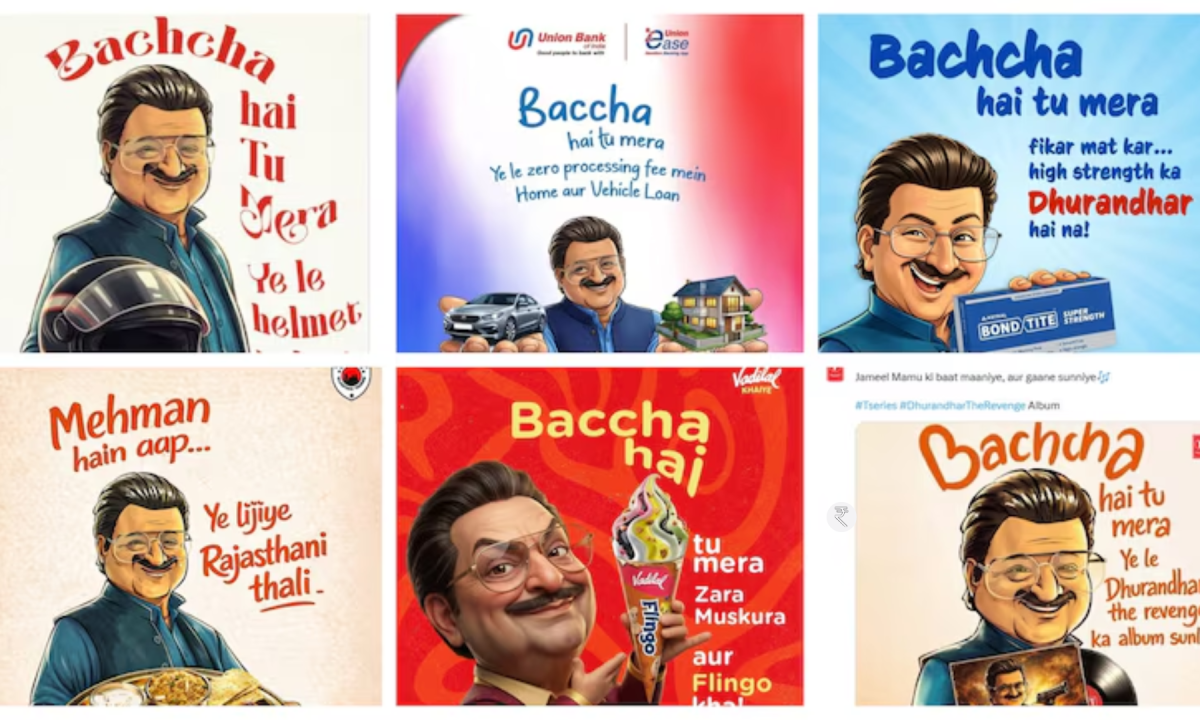
Multiple brands quickly recognised the recall value of the dialogue and adapted it into smart, platform‑native creatives. From food and beverages to fintech, travel, and even government agencies, everyone wants a slice of the “Bachcha hai tu mera” conversation.
Some standout uses include:
- Delhi Police using “Helmet pehnega tabhi syana banega, mera bachcha” to drive home a road safety message with warmth and wit.
- F&B brands like Haldiram’s , The Waffle Co.- TWC., and Bonn Nutrients Pvt Ltd reimagining the line around indulgence, comfort, and everyday treats.
- Platforms such as BookMyShow, CashKaro.com, and travel brands like Rajasthan Tourism and Travollex plugging the dialogue into offers, experiences, and destination‑led storytelling.
Most of these campaigns do not over‑complicate the creative; they keep the original line intact or lightly tweaked, trusting its familiarity to do the heavy lifting. The character association with Jameel Jamali adds further charm and instant recognition.
Why This Trend Works So Well
From a branding and consulting lens, this trend checks multiple strategic boxes.
- Cultural relevance: Brands borrow from a moment that is already viral instead of trying to manufacture attention from scratch.
- Emotional layering: The line carries undertones of affection, protectiveness, and authority, letting brands speak in a more human voice.
- Platform fit: The meme‑first format is inherently social‑media native, designed for quick consumption, shares, and remixes.
When used well, this kind of trend‑riding does more than just chase virality; it helps brands sound like they are part of the same culture their audiences live in.
The Fine Line Between Trendy And Tired
However, there is a flip side. The more frequently a meme is used, the faster it risks becoming generic or even irritating. Over‑reliance on the same hook can dilute both the dialogue and the brand using it.
For brands, the key questions should be:
- Does this dialogue genuinely fit our category, audience, and tone of voice?
- Are we adding a fresh narrative layer, or just copy‑pasting the latest meme?
- Can this moment be linked to a larger, long‑term brand story instead of a one‑off post?
Those who answer these thoughtfully will stand out, even in a crowded trend.
What This Means For Your Brand
The “Bachcha hai tu mera” wave is more than a fleeting meme; it is a live case study in how storytelling, timing, and cultural listening can converge into measurable brand impact. From Delhi Police’s meaningful road‑safety messaging to consumer brands tapping into humour and comfort, the lesson is clear: when culture speaks, brands must be ready with context‑aware creativity.
At Perfiniti, this is exactly where the focus stays, helping brands:
- Decode cultural signals early.
- Design creatives that respect both context and character.
- Build campaigns that go beyond “moment marketing” into sustained brand recall
Trends will come and go, but the brands that know how to convert a dialogue into a dialogue with their audience are the ones that stay memorable.